Humidity and soil chemistry
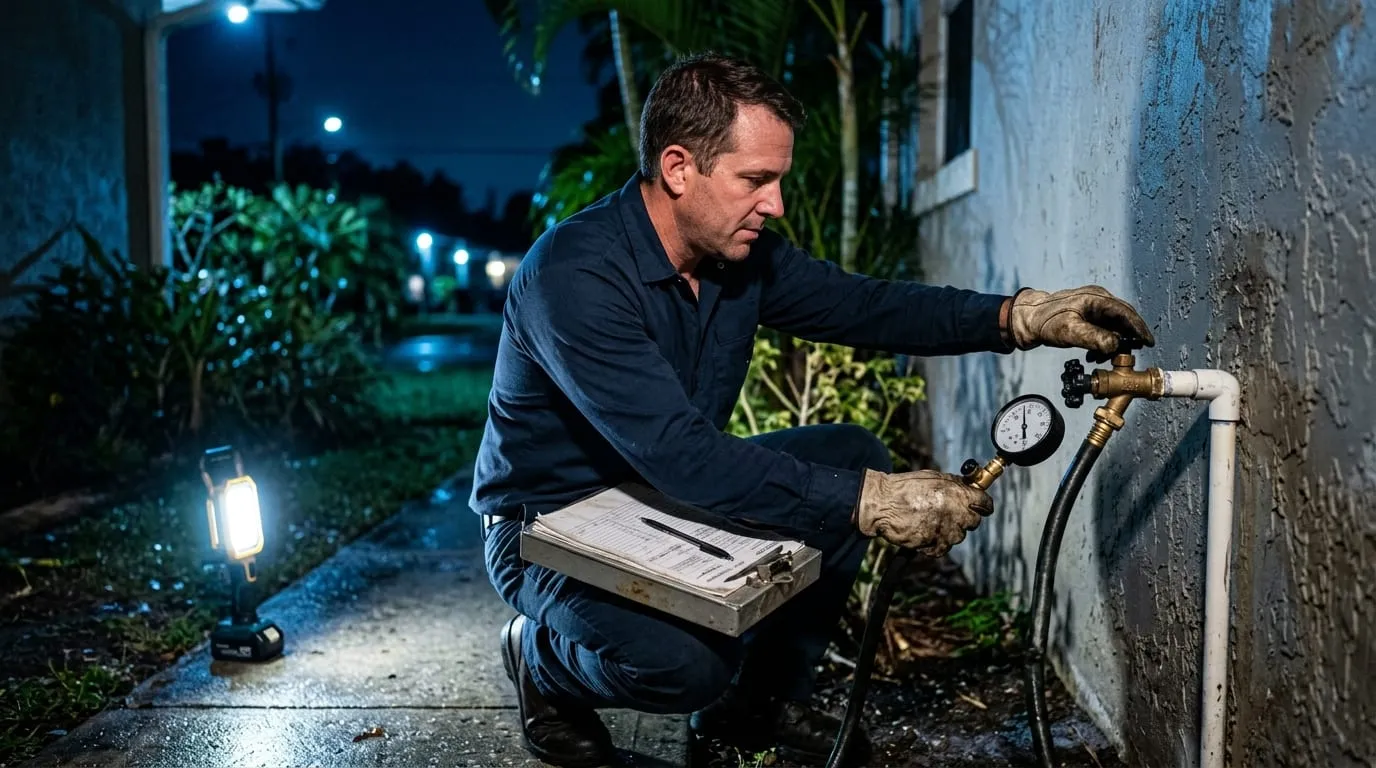
Iron oxidizes faster here than in the drier states the 40-to-50-year rating was written for. Failure at 25 to 30 is common enough that age is the first question asked.
Camera-verified scope · answered 24/7
The line is scoped end to end first, so the price covers the run that has actually failed rather than the whole house. Replacement under slab or a cured liner, depending on what the camera shows.
Why does cast iron fail early in South Florida?
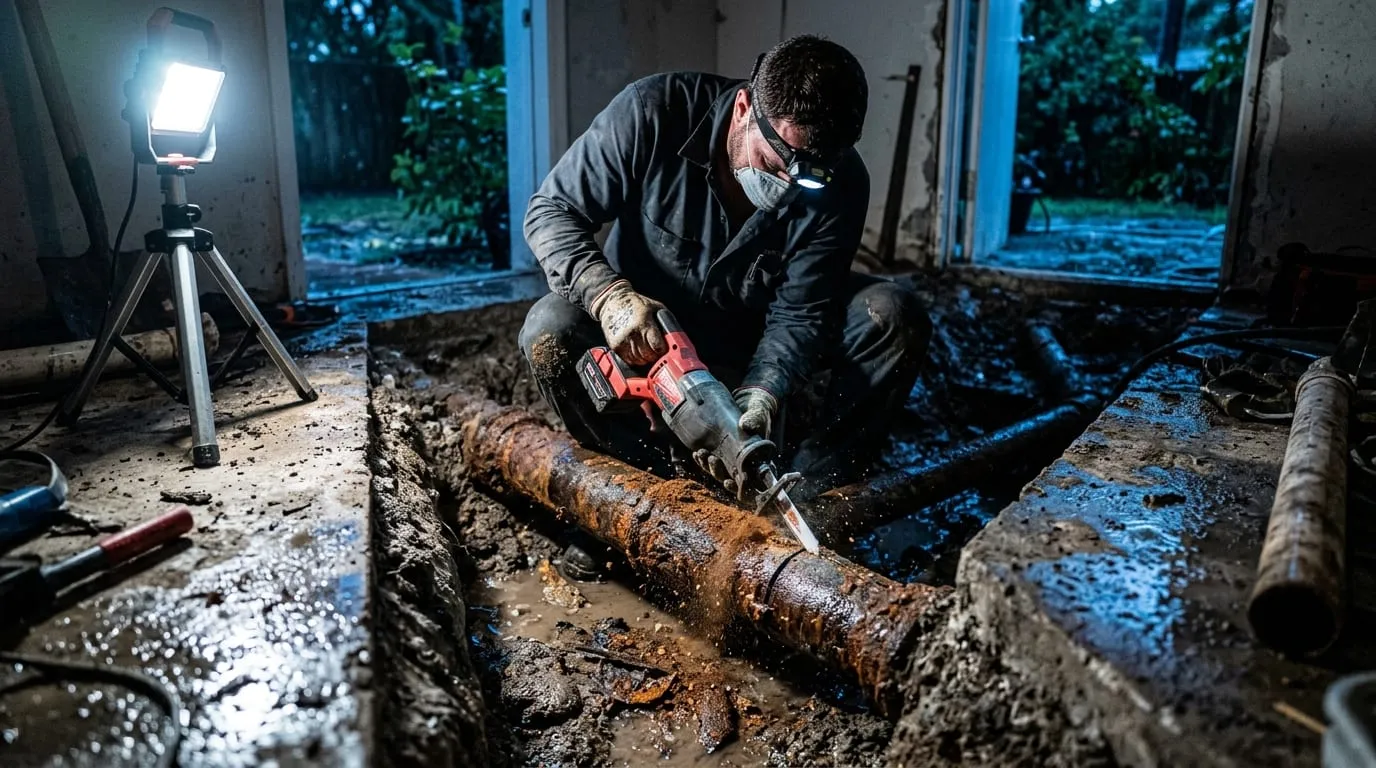
Cast iron drain lines are rated for roughly 40 to 50 years, and in South Florida many begin failing at 25 to 30. The pipe corrodes from the inside: the bore roughens and scales, and that rough wall then catches grease, hair and mineral deposits every time the drain is used.
That is why recurring clogs in a house built between 1945 and 1975 are usually a symptom of the pipe itself rather than of what went down it. Snaking clears the blockage and leaves the cause, so the same drain backs up again a few months later.
It shows up as slow drains that keep coming back, sewer odour with no obvious source, and sometimes a slab leak where the line has perforated. A camera inspection settles it in one visit: either the wall is scaled but intact, which can be cleaned and watched, or it has failed, which is a replacement or a liner.
When it is the pipe
Any one of these can be something else. Two or three together, in a house of the right age, is almost always the line.
Cleared, then slow again within months. A scaled bore re-catches debris as fast as it is cleared, so the gap between visits keeps shortening.
A perforation lets gas escape into the fill under the slab. The smell is often strongest in a room with no fixture in it.
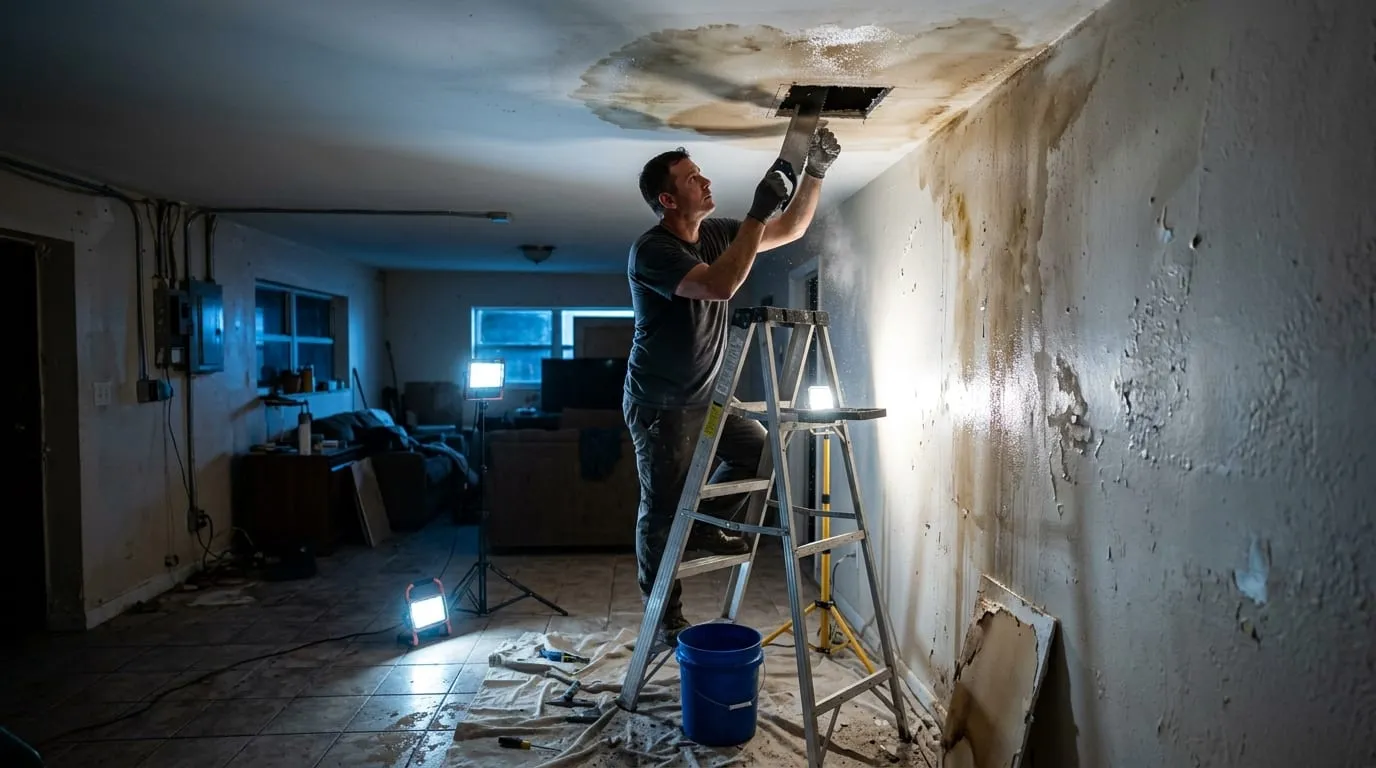
Water leaving a failed line spreads through fill rather than pooling where it left the pipe, so the wet spot is rarely above the break.
A long-running leak washes fines out from under the slab. The floor moves before anything is visibly wet.
One fixture is local. Several at once is the main line, which in a house of this era means the run under the slab.
How the job goes
Five steps, in this order, because the scope decides everything after it.
End to end, from the cleanout through the run under the slab. You see the footage; the scope is not a description you take on trust.
Where the wall has gone and where it is only scaled. That boundary is what separates a targeted repair from replacing the whole house.
For the run that has actually failed, with the method named. Nothing starts until you have accepted it.
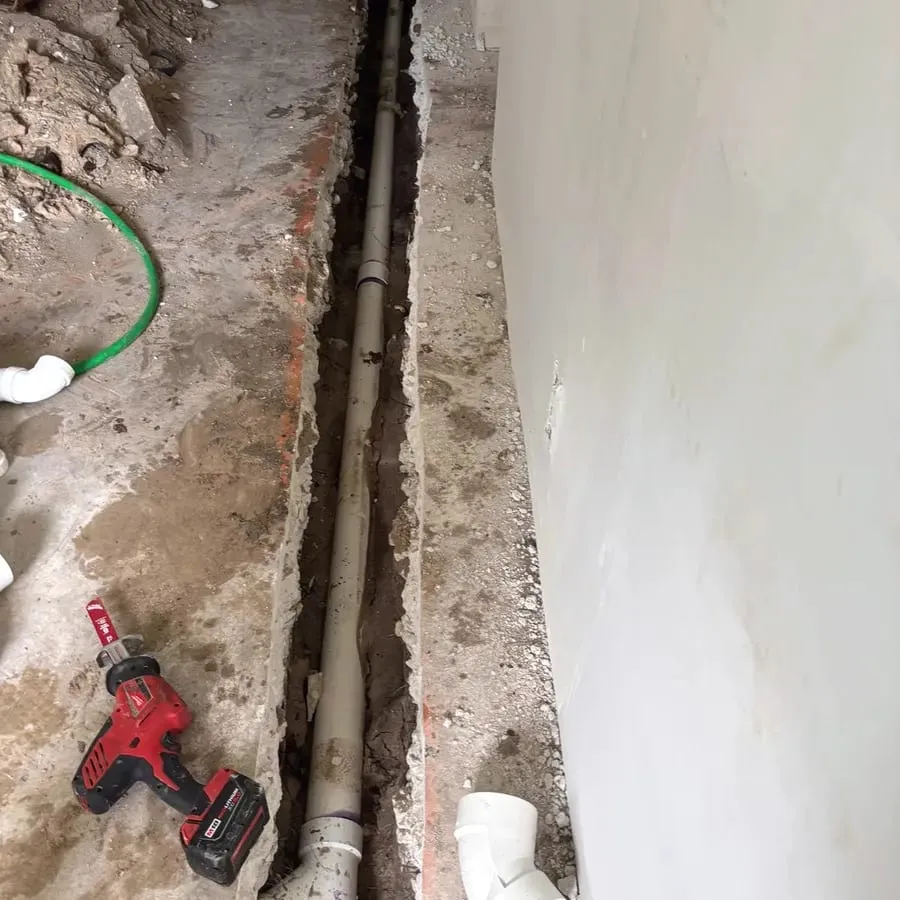
Cutting the slab and installing new PVC where access allows, or a cured liner where opening the floor would cost more than it saves.
A second camera pass after the work, plus photographs and an itemized invoice in the form an insurance adjuster asks for.
Why here
Cast iron does not fail on a calendar. It fails on what surrounds it.
Iron oxidizes faster here than in the drier states the 40-to-50-year rating was written for. Failure at 25 to 30 is common enough that age is the first question asked.
Almost everything residential here sits on a slab, so the drain runs in or under concrete instead of hanging where it could be seen. Nothing warns you before the symptom.
Escaping water spreads through fill rather than pooling. That is why the damp patch is rarely above the break, and why detection comes before demolition.
Banyan, ficus and royal poinciana send roots into any leaking joint, and the subtropical climate means their advance never pauses seasonally.
Where the floor is worth protecting, a cured liner forms a new pipe inside the old one, with a stated 50-year design life. Where access is easy, replacement is cleaner.
Our work
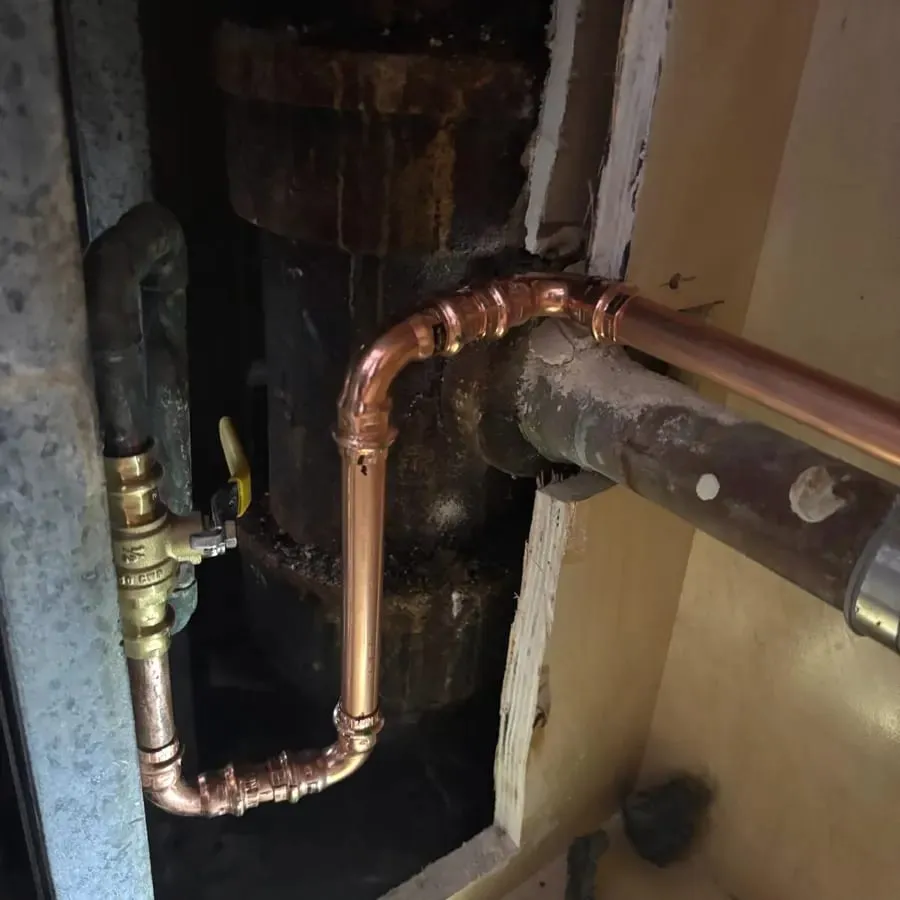
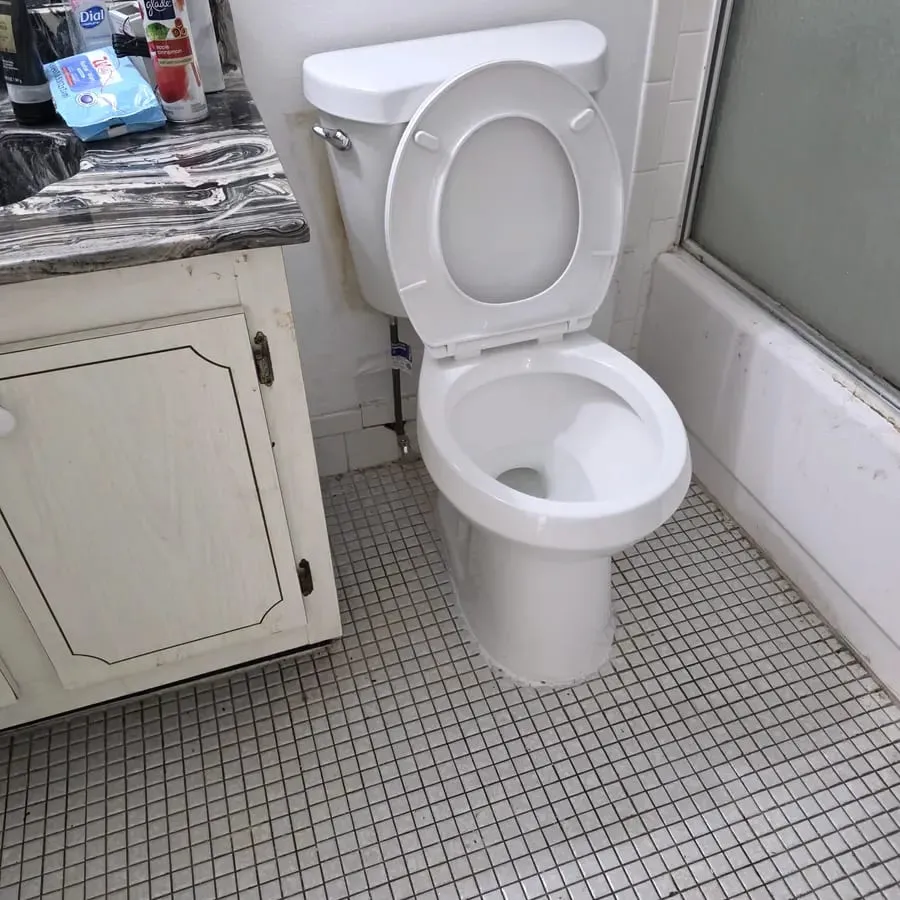
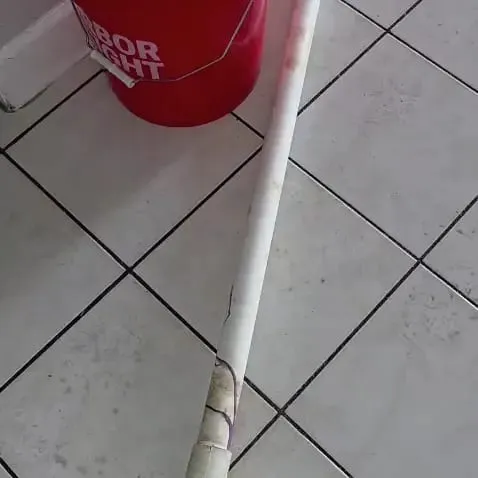
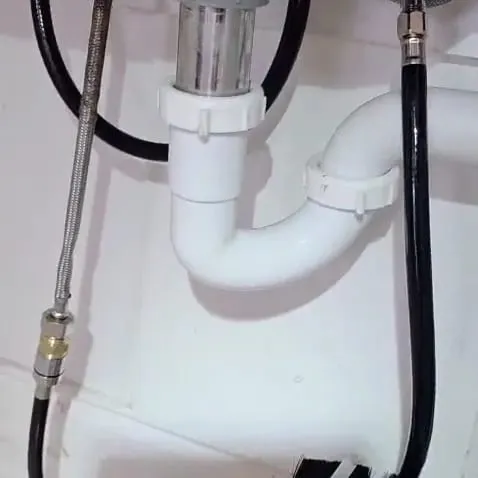
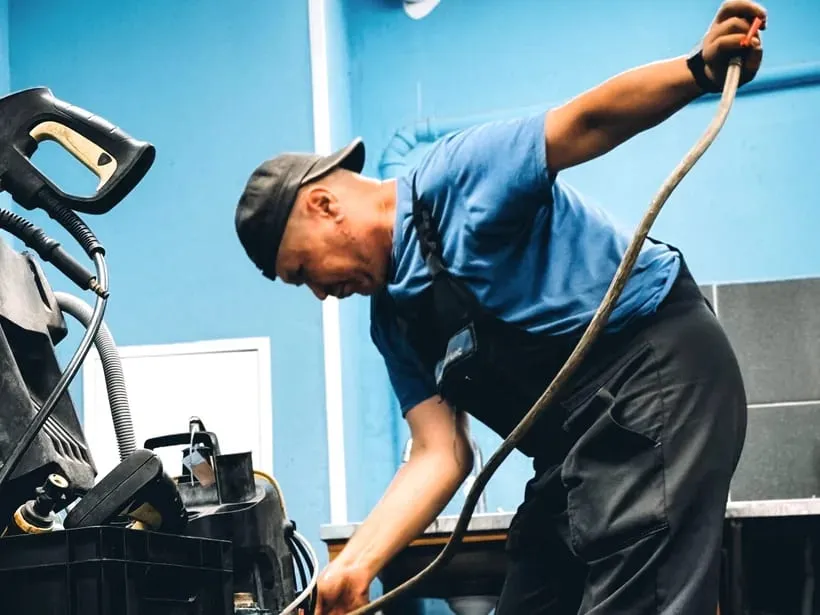
Taken on site by the crew, not bought from a stock library. Every tile is the same crop so you can compare them properly.
Reviews
Real reviews from the company’s own Google Business Profile, quoted with the reviewer’s public name. Nothing on this page was written by us.
77of the 77 reviews captured from the profile are five stars, and none is below five.
Read straight from the Google Business Profile on August 20, 2026. Counted, not estimated.
Open the Google profileMike came and save me the day he replaced my waterheater after It was flooded all over thanks God there is emergency plumbing SFL BIG RECOMANDATION

Moti gave exceptional service ! He arrived quickly and was done less than an hour ! Will use this company again

Had a really slow drain in my bathroom and it was driving me crazy. The guy who came out was super chill and found a bunch of hair and gunk clogging it up. He cleared it out in like 20 minutes, and now it’s draining faster than before! …
Questions
Not usually. The camera separates the run that has failed from the run that is only scaled, and the price covers the first. Replacing everything is sometimes right in a small house where access is the expensive part, but that should follow the footage, not precede it.
For the right failure, yes. A cured liner forms a new pipe inside the old one and manufacturers state a 50-year design life. It cannot fix a pipe that has lost its shape or a bad fall. The camera decides which you are looking at.
It depends on where the failure is and which method the line takes. A liner needs access at each end rather than along the run; replacement needs a trench over the pipe. You get that answer before the work is priced.
That is between you and your insurer. What we can do is document it: camera footage of the line, photographs of the failure, and an itemized invoice in the form an adjuster asks for.
A scaled line that has not perforated can be cleaned and watched, and sometimes that is the honest answer. A line leaking under a slab cannot: the water is washing fines out from under the foundation the whole time.
Related work
The jobs that most often turn out to be part of the same problem.
Live dispatch · 24 / 7 / 365
A person answers at any hour. The camera goes in first, and the price comes after that.
No obligation. Work performed under Florida plumbing contractor license CFC1433655.