
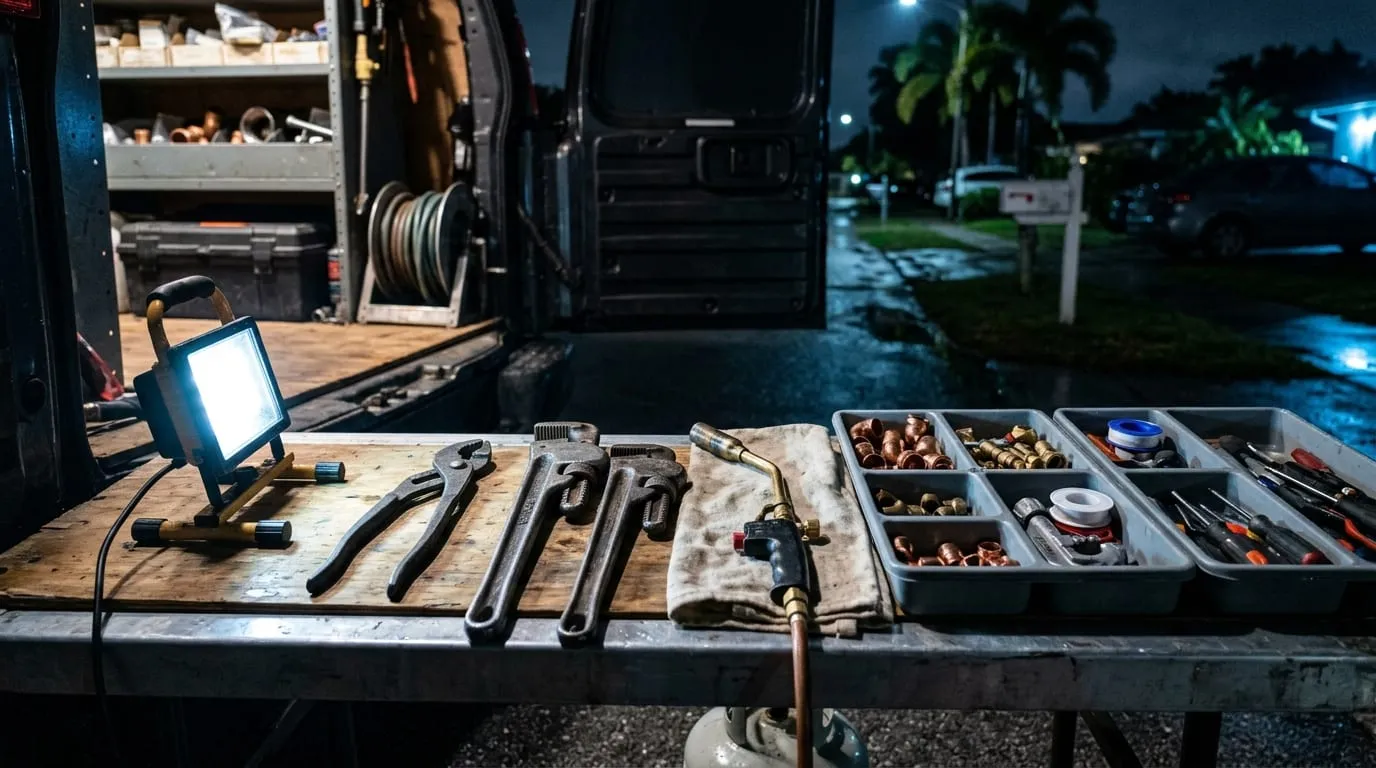
Answered 24/7 · permitted, pressure tested, inspected
Gas lines, where the inspection is the job rather than the paperwork
The line is installed to the Florida Fuel Gas Code, pressure tested, and inspected before gas is turned on, because that sequence is what the code requires rather than a formality added at the end.
- CFC1433655Florida plumbing contractor license
- Tested before gaspressure test, then inspection
Does a gas line really need a permit in Florida?
For anything beyond swapping a direct appliance connection, yes. Florida Building Code requires gas line work to be done by a licensed gas contractor, under a pulled permit, with the finished installation pressure tested and passing a licensed inspection before gas is turned on. That order matters: the test and the inspection come before the supply, not after it.
Liquefied petroleum gas is regulated separately again. The Florida Department of Agriculture and Consumer Services licenses the businesses that install, service or repair LP containers, systems and appliances, and LP storage is designed and installed to the Florida Fire Prevention Code and NFPA 58.
In practice a homeowner does not deal with any of that directly. The contractor determines what the local jurisdiction requires, pulls the permit and schedules the inspections as part of the job, which is one of the clearer reasons not to treat gas as a handyman task.
What brings people here
The work that needs a gas line rather than a connection
The dividing line is whether anything beyond the appliance whip is being changed.
Converting a water heater or a range to gas
A new run, a new shut-off and a new connection point, which is permitted, pressure tested and inspected work rather than an appliance swap.
Extending a line to a new appliance
An outdoor kitchen, a pool heater, a generator or a dryer. The sizing of the whole system changes when something is added to it, which is part of what the inspection checks.
You can smell gas
That is not a scheduling question. Leave the building, do not operate switches, and call from outside. The line gets pressure tested to find it rather than sniffed for.
Corroded or damaged pipe
Coastal air works on exterior gas pipe the same way it works on everything else here, and a run that looks poor at the meter is worth testing rather than watching.
A property sale or an insurance requirement
An unpermitted gas alteration by a previous owner turns up at exactly the wrong moment. Testing and permitting it after the fact is possible and much easier before a closing date.
Questions
Straight answers before you call
Can I run a gas line myself?
Beyond a direct appliance connection swap, Florida Building Code requires a licensed gas contractor, a permit, a pressure test and a passed inspection before gas is turned on. This is one of the few areas where the code is unambiguous about who may do the work.
Is propane different from natural gas?
In regulation, yes. LP gas is licensed by the Florida Department of Agriculture and Consumer Services, and LP storage systems are designed and installed to the Florida Fire Prevention Code and NFPA 58, which is a separate framework from the fuel gas code that governs the piping.
What do I do if I smell gas right now?
Get everyone out, do not operate light switches or anything else electrical, and call from outside the building. Then call the gas supplier and us. Nothing about diagnosing it is worth doing from inside.
Who deals with the permit?
We do. The contractor determines what the local jurisdiction requires, pulls the permit and schedules the inspections. Each of the cities we work in runs its own building department, so the route differs and that is our problem rather than yours.
Related work
What gas work usually accompanies
Rarely a standalone job.
Live dispatch · 24 / 7 / 365
Adding gas, or worried about a line you already have?
A person answers at any hour. If you can smell gas, leave the building first and call from outside.
No obligation. Work performed under Florida plumbing contractor license CFC1433655.