Built after Interstate 95
The area developed as suburbs from the late 1960s, as families moved out of Miami neighborhoods once discriminatory covenants were outlawed. That is the building date that decides what is under the slab.
Miami-Dade County · line answered right now
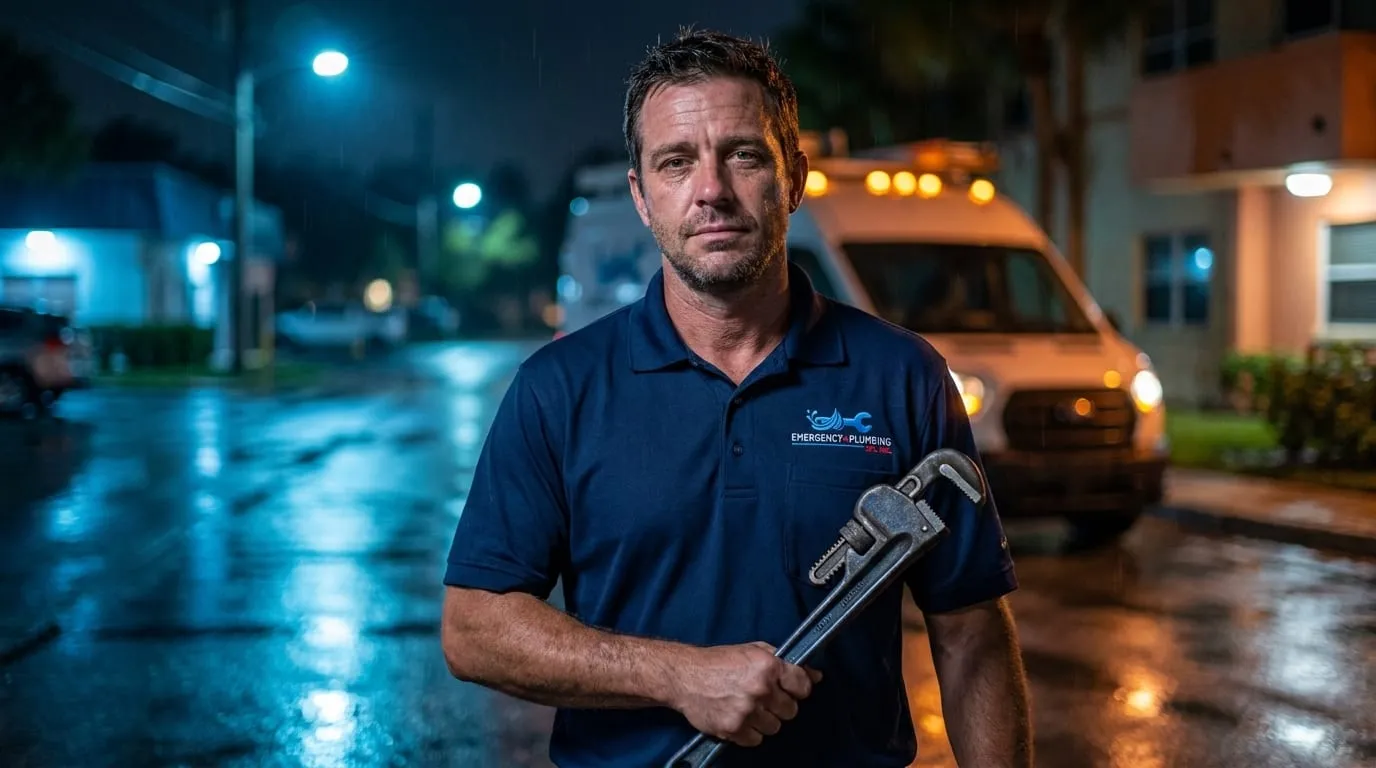
Dispatch takes the address, stays on the line while you find the shut-off, and routes a plumber who knows this is late-1960s housing under a city that only dates from 2003.
Why is Miami Gardens housing older than the city itself?
Because the city was assembled rather than built. Miami Gardens incorporated in 2003 by consolidating seven previously unincorporated communities, so it is a new city made of established neighborhoods. Those neighborhoods date from the late 1960s, when Interstate 95 went in and discriminatory housing covenants were struck down, and middle and upper income African American and West Indian American families moved north out of Miami into this area.
That matters for one practical reason. A house from the late 1960s is on the cast iron side of the line where South Florida drain material changes, and cast iron rated for forty to fifty years often begins failing here at twenty-five to thirty. The city is twenty-three years old. The pipe under it is nearly sixty.
The second thing worth knowing is that septic is still a live question in parts of northern Miami-Dade, and the county publishes a formal route for connecting a property from septic to sewer.
What is under these houses
Miami Gardens is a 2003 city sitting on a 1960s and 1970s housing stock.
The area developed as suburbs from the late 1960s, as families moved out of Miami neighborhoods once discriminatory covenants were outlawed. That is the building date that decides what is under the slab.
Andover, Bunche Park, Carol City, Lake Lucerne, Norland, Opa-locka North and Scott Lake were consolidated into a single municipality. Each brought its own build dates with it.
The Norwood Water Treatment Plant sits inside Miami Gardens and has been owned by the City of North Miami Beach for more than sixty years. It supplies this city through NMB Water.
Miami-Dade publishes the route: a state pump-out and abandon permit, an allocation letter from county regulation, a city plumbing permit, and county water and sewer approval.
Flat and low, which is why a slab leak here spreads through fill rather than pooling at the break, and surfaces where the floor lets it.
How it fails here
What follows from a late-1960s build reaching sixty.
In a house from this era the drain line is cast iron and its bore has roughened from the inside. Grease and hair catch on the wall instead of passing, so the clog comes back on its own schedule regardless of what goes down it.
Ask for a camera before a third clearing.
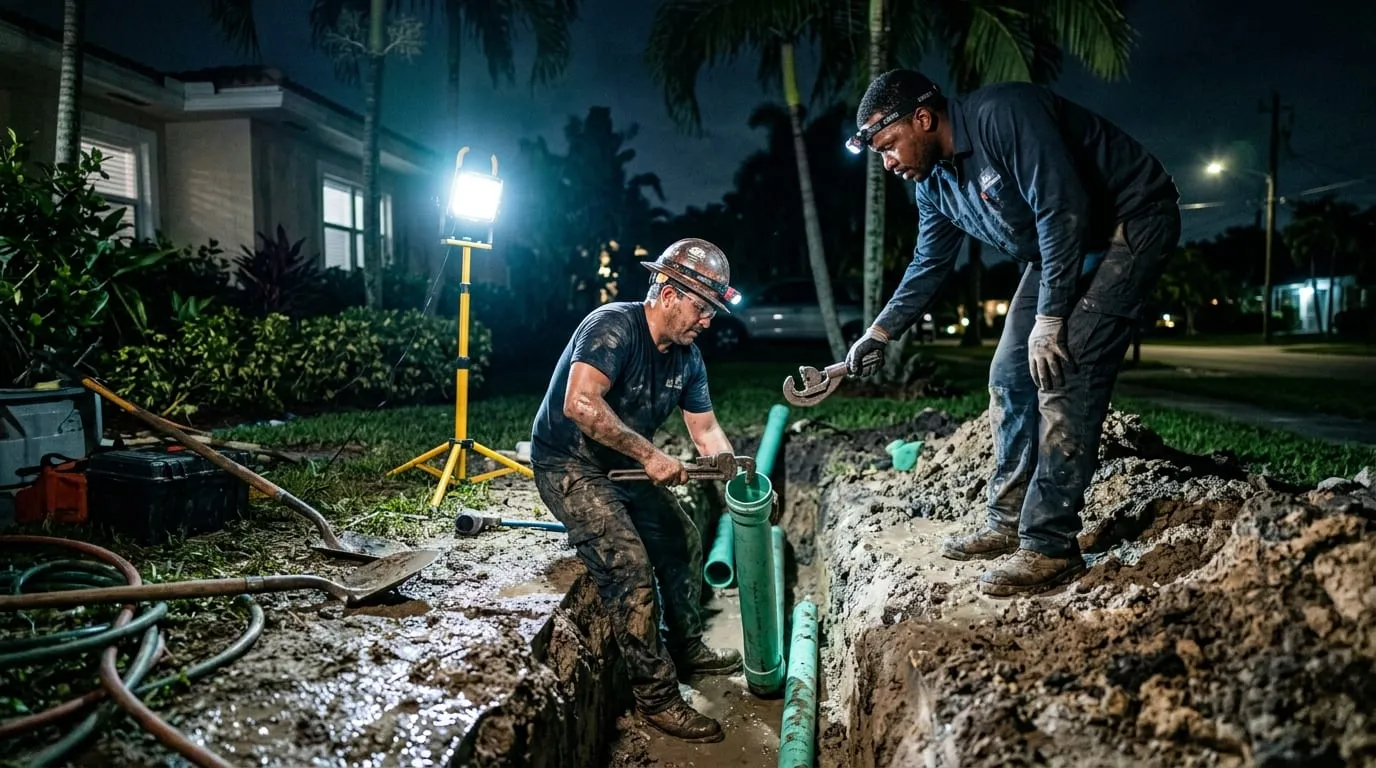
Cast iron replacementOne fixture is local. Several at once is the building sewer or the lateral, and on a lot from the original build that run is as old as the house and has had sixty years of root pressure on it.
Stop using water anywhere on the property.
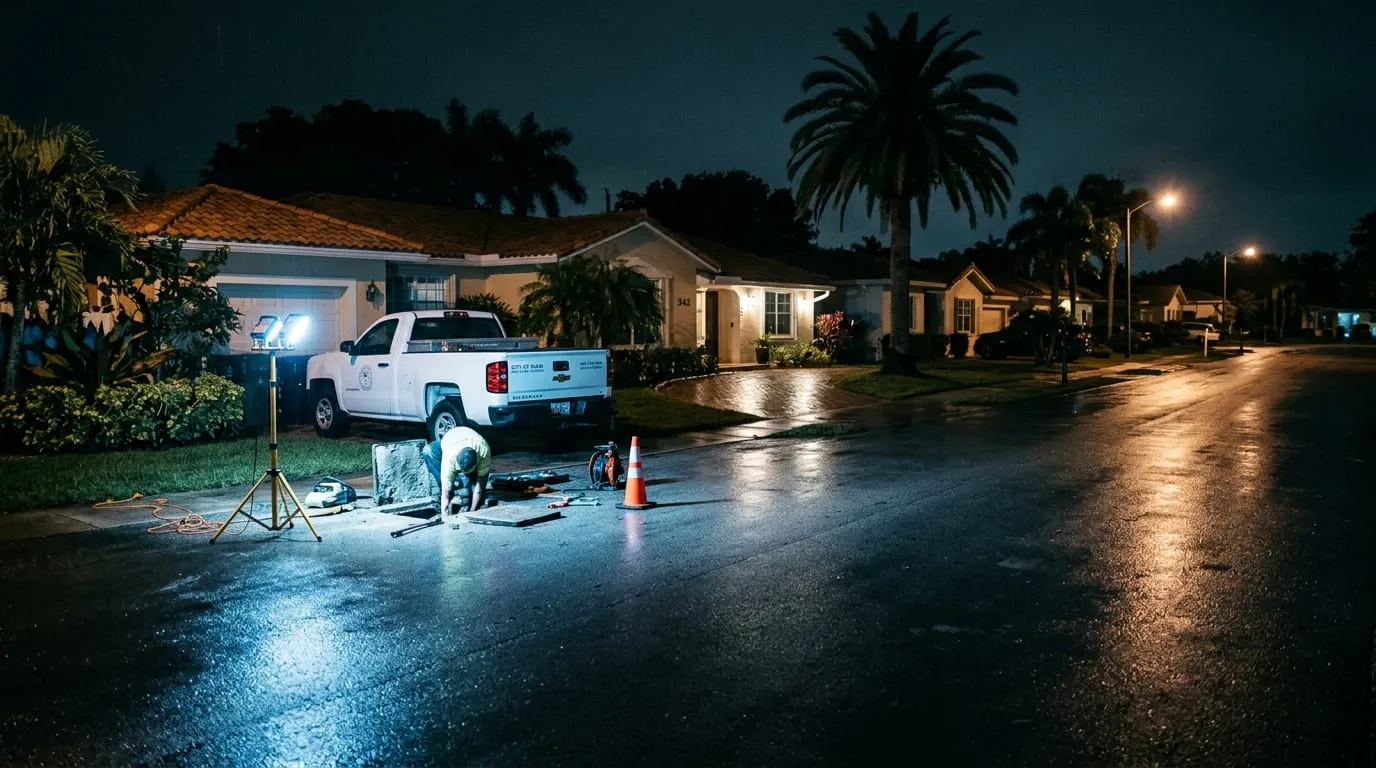
Sewer line repairAt ten feet with a shallow table there is no gradient for escaping water to follow, so it moves sideways through fill until a seam lets it up. The wet patch is where the floor gave way, not where the pipe did.
Have it located before anything is opened.
Leak detectionWhere we work
Each was its own place before 2003, and each brought its own build dates.
One of the oldest of the seven consolidated communities, which means it sits at the early end of the cast iron era rather than the late one.
A long-established neighborhood that predates incorporation by decades. Houses here have had several generations of partial repairs behind their walls.
The northern section against the Broward County line, where the city meets Miramar and the utility answers can change on the other side of the street.
One of the seven census-designated places consolidated in 2003, on the same flat, low ground as the rest of the city.
Another of the communities folded into the city, with the same late-1960s suburban build behind it.
Who owns what
The plant is in this city and belongs to a different one.
Reviews
Real reviews from the company’s own Google Business Profile, quoted with the reviewer’s public name.
77of the 77 reviews captured from the profile are five stars, and none is below five.
Read straight from the Google Business Profile on August 20, 2026. Counted, not estimated.
Open the Google profileMike came and save me the day he replaced my waterheater after It was flooded all over thanks God there is emergency plumbing SFL BIG RECOMANDATION

Moti gave exceptional service ! He arrived quickly and was done less than an hour ! Will use this company again

Had a really slow drain in my bathroom and it was driving me crazy. The guy who came out was super chill and found a bunch of hair and gunk clogging it up. He cleared it out in like 20 minutes, and now it’s draining faster than before! …
Questions
Cast iron drain lines as the working assumption, and a camera to turn that into a fact. Cast iron is rated for forty to fifty years and in Florida soil and humidity many begin failing at twenty-five to thirty, so a house from that era is well past both figures.
NMB Water, which is owned and run by the City of North Miami Beach. The Norwood Water Treatment Plant that produces it is physically inside Miami Gardens but has belonged to North Miami Beach for more than sixty years.
Four approvals in sequence: a pump-out and abandon permit from the state Department of Health, an allocation letter from county regulation, a plumbing permit from the city, and sign-off from the county water and sewer department. It is a process rather than a single job.
Yes, and the line is answered by a person. The city runs from the Broward line down toward Miami Lakes, all of it inside the working area.
Nearby
Miami Gardens borders the county line as well as its neighbors.
Live dispatch · 24 / 7 / 365
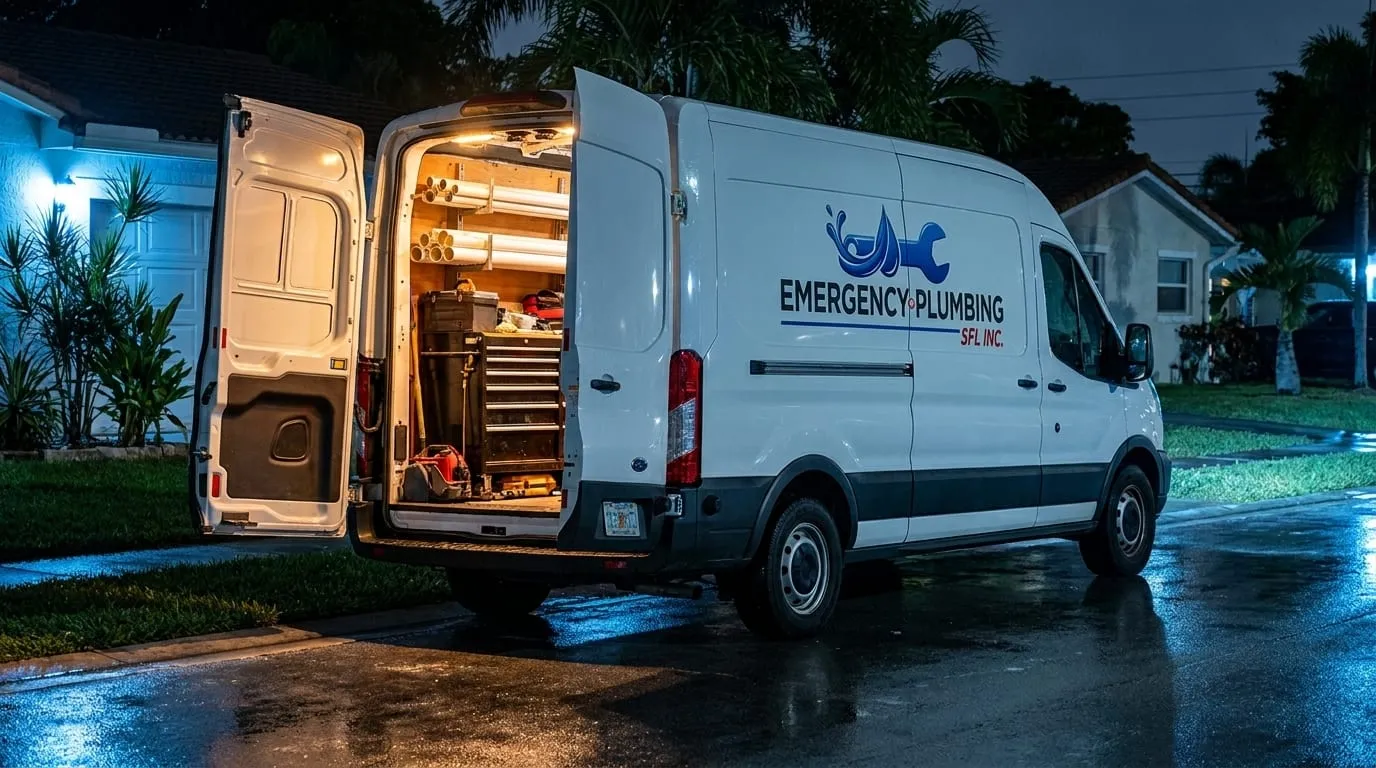
A person answers at any hour, walks you through shutting the water off, and a plumber is routed to the address.
No obligation. Work performed under Florida plumbing contractor license CFC1433655.