
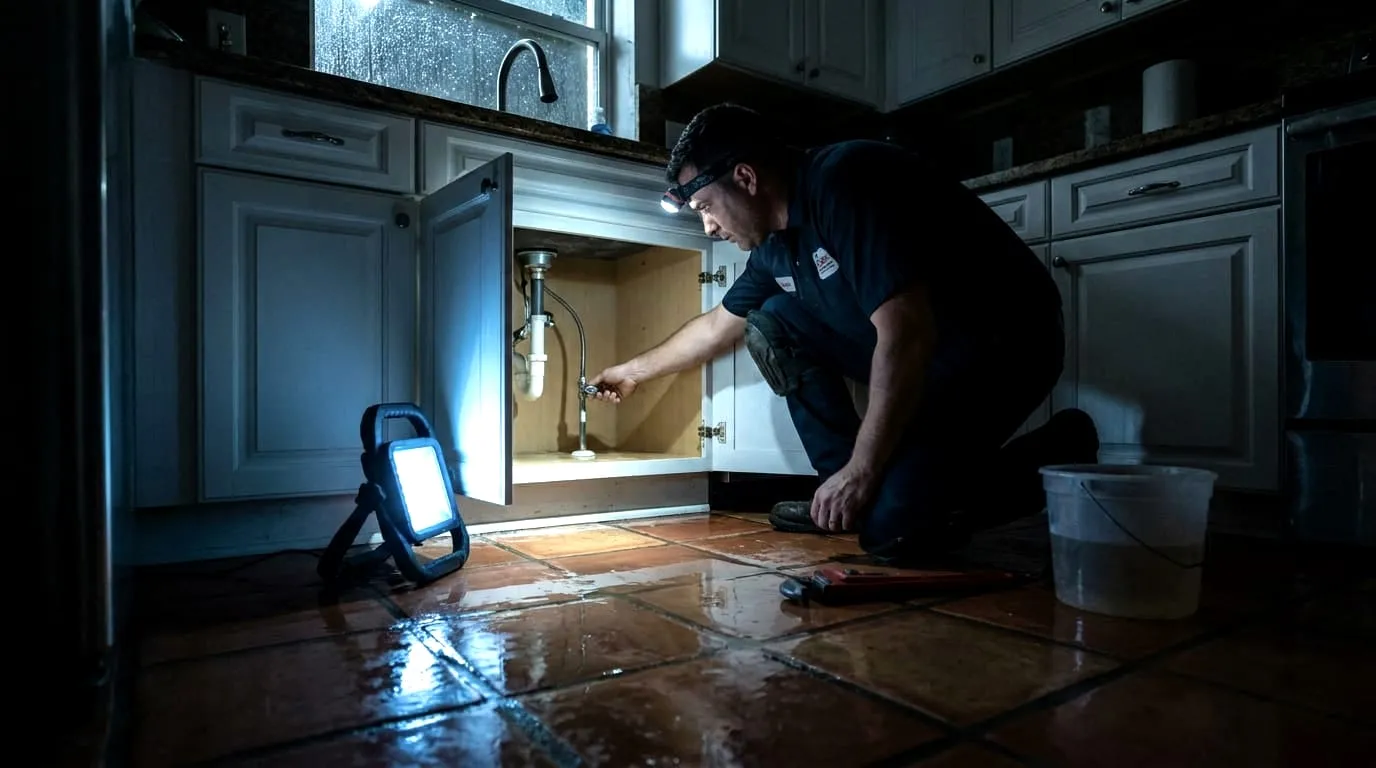
Answered 24/7 · across the three counties
Septic systems, where the water table decides whether yours works this year
A drainfield needs a mandated vertical separation from the water table to work at all, and here that table moves, so the same system can be compliant one year and saturated the next.
- CFC1433655Florida plumbing contractor license
- Two to three yearsFlorida pumping interval, not three to five
Why does my septic only back up when it rains?
Because a drainfield does not dispose of water, it disperses it into the ground, and it needs a mandated vertical separation between the field and the water table to do that. In South Florida the table moves. When it rises above that separation the field cannot absorb, and the system stops working properly regardless of how the household is using it.
That is not a rare edge case here. In Miami-Dade alone more than 105,000 residential properties are still on septic, and 58,349 of them are periodically compromised, meaning they fail during storms or in wet years. Where the table has risen permanently, a dosing tank may be required to keep a system compliant.
It is also why the Florida pumping interval is shorter than the national rule of thumb. Sandy soil, a high table and heavy rain put the sensible interval at roughly two to three years rather than three to five.
What you are seeing
The signs worth acting on before a wet season
Most of these are gradual, which is exactly why they get left.
Backups that track the weather
Fine all summer and failing every autumn is the clearest signal that the system is reporting the water table rather than the household.
Wet or unusually green ground over the field
Effluent surfacing is the statutory definition of a system failure, and it is a sanitary nuisance rather than a maintenance issue.
Slow drains across the whole house
One fixture is a fixture. Everything at once, with a septic system, is the tank or the field rather than the plumbing.
You do not know when it was last pumped
In Florida the interval is roughly two to three years, and shorter for a larger household. If nobody can name a date, that is the answer.
Sewer has reached your street
Connecting is a documented process rather than a single job, and it is worth starting before a failure forces the timing.
How the job goes
Working out whether it is the tank, the field or the ground
Three quite different problems that present the same way.
- 01
Establish what the system is
Tank size, bedroom count and age. Florida requires a minimum 900-gallon tank for up to three bedrooms with 150 gallons added per additional bedroom, so an extension that never touched the tank is a common cause of a system that suddenly cannot cope.
- 02
Separate the tank from the field
A tank that needs pumping and a field that has lost its separation from the water table look identical from inside the house and need completely different work.
- 03
Say which it is, plainly
Pumping a tank when the field is saturated buys a few weeks and solves nothing. Where the honest answer is the field or the ground, you get that answer with the reasoning rather than a repeat visit.
Questions
Straight answers before you call
How often should a Florida septic tank be pumped?
Roughly every two to three years, which is shorter than the national rule of thumb of three to five. Sandy soil, a high water table and heavy rain are the reason. A larger household or heavy water use can push it to every one to two years.
Does pumping fix a drainfield?
No, and that distinction matters. Pumping empties the tank. If the field has lost its separation from the water table it will still not absorb, so the relief lasts weeks. Anyone who pumps a saturated system and calls it a repair is selling you the same visit again.
What legally counts as a failure?
Florida statute defines it as a condition that discharges untreated or partially treated wastewater to the ground surface or surface water, or that stops building plumbing discharging properly, presenting a sanitary nuisance. Wet ground over the field is not cosmetic.
Should I connect to sewer if I can?
Where it is available it removes the water table from the equation entirely. In Miami-Dade the route is a sequence of approvals rather than one job: a state pump-out and abandon permit, a county allocation letter, a plumbing permit and county water and sewer sign-off.
Do you cover septic across all three counties?
Yes, and it matters most on the western and agricultural edges, where municipal sewer never reached and the systems are oldest.
Related work
What sits either side of a septic problem
Half of these calls turn out to be something else.
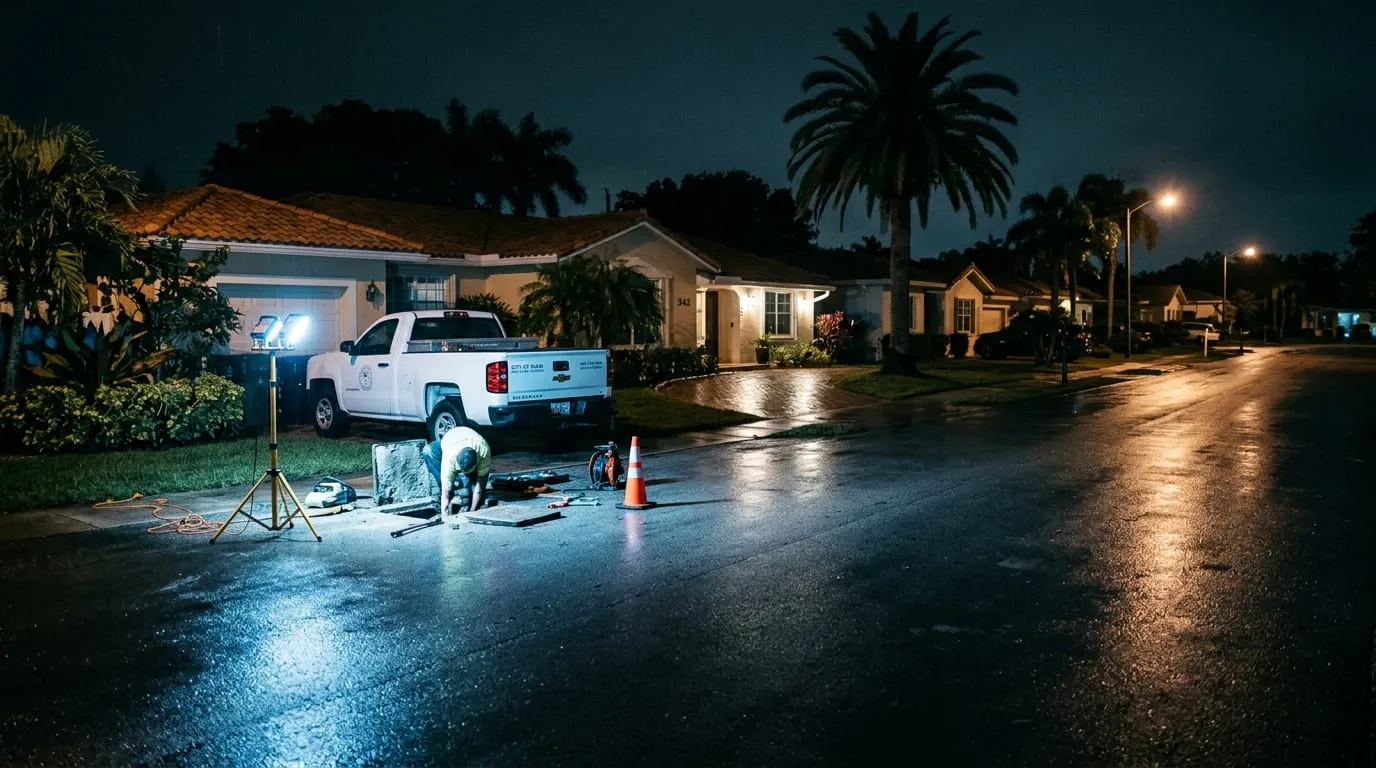
Live dispatch · 24 / 7 / 365
Backing up again now the rain has started?
A person answers at any hour, and the first job is separating a tank problem from a water table problem, because only one of them is fixed by pumping.
No obligation. Work performed under Florida plumbing contractor license CFC1433655.