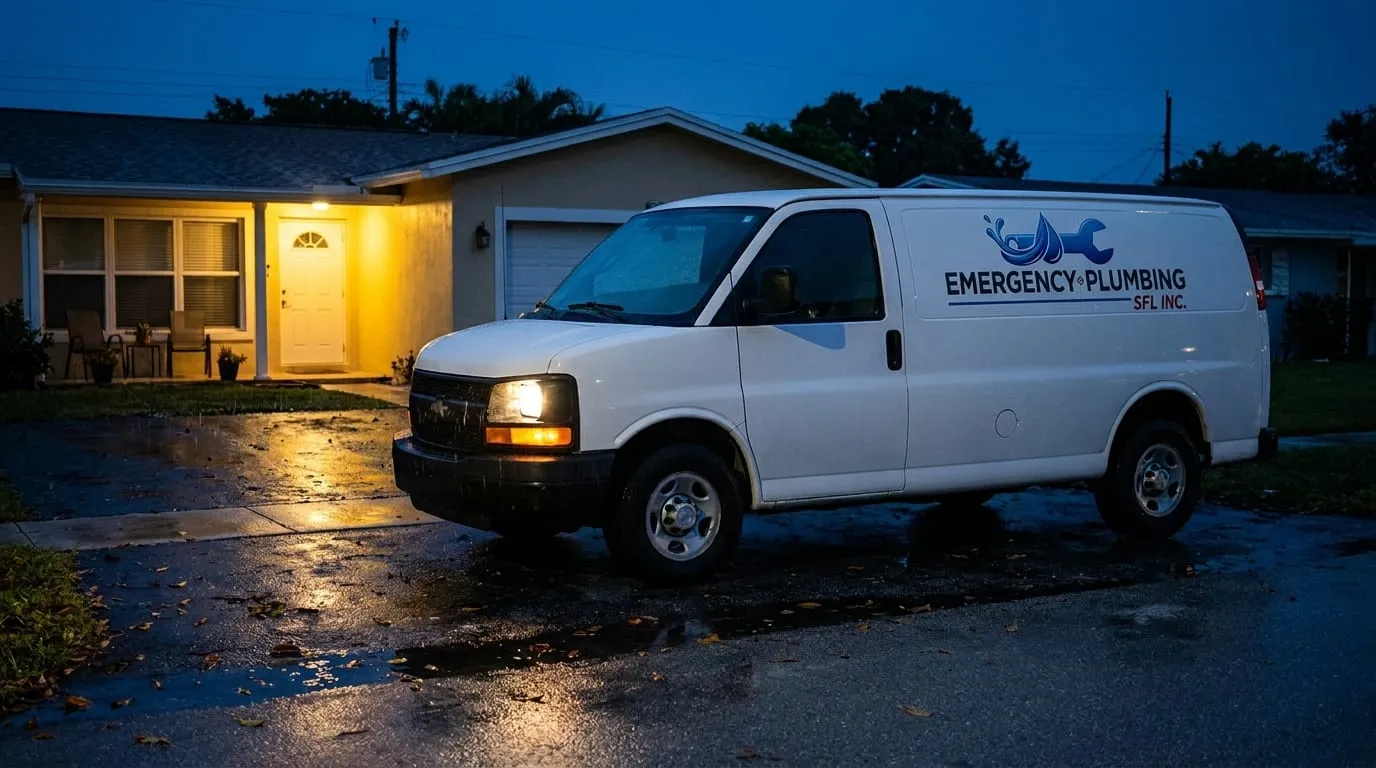
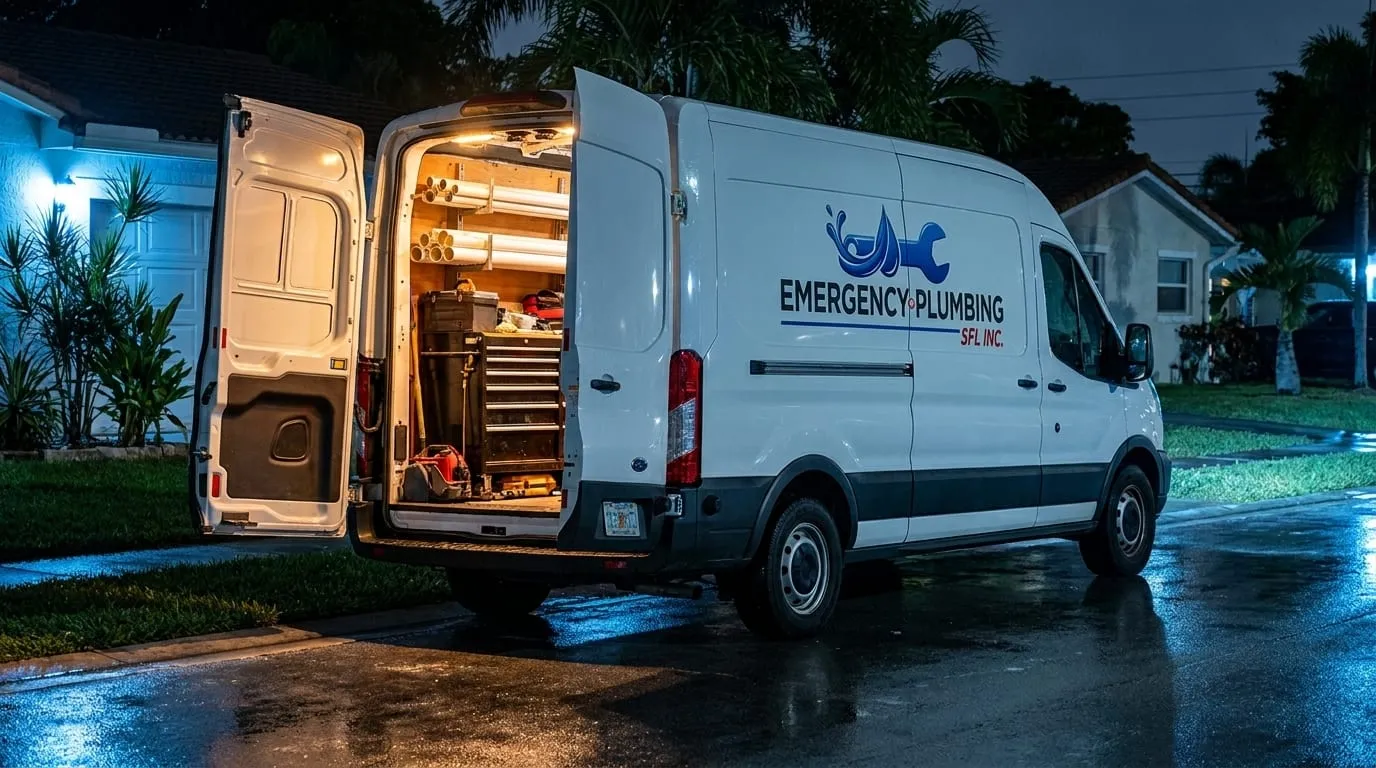
Water at fifteen to twenty feet
You cannot dig deeper than that here without reaching it. That single constraint shapes excavation, slab work and every lateral repair in the city.
Miami-Dade County · line answered right now
Dispatch takes the address and the building type, because a Brickell tower and a 1922 house on Coral Way are two entirely different jobs in the same city.
Why is the water table such a problem in Miami specifically?
Because of how shallow it is, and there is a single fact that says it better than any description: it is not possible to dig more than fifteen to twenty feet beneath this city without hitting water. That is the reason the transit system runs elevated rather than underground, and it is the reason every excavation here is a different job from the same excavation inland.
For plumbing it decides two things. Water escaping a pressurized line under a slab has nowhere to drain down to, so it spreads sideways through fill until a seam in the floor lets it up, which is why the damp patch is almost never above the break. And any repair that needs depth, at a lateral or a main, is working against groundwater rather than in dry soil.
Underneath all of it is the Miami Rock Ridge, a limestone formation running beneath the eastern side of the metro area, whose highest natural point is in Coconut Grove at twenty-four feet.
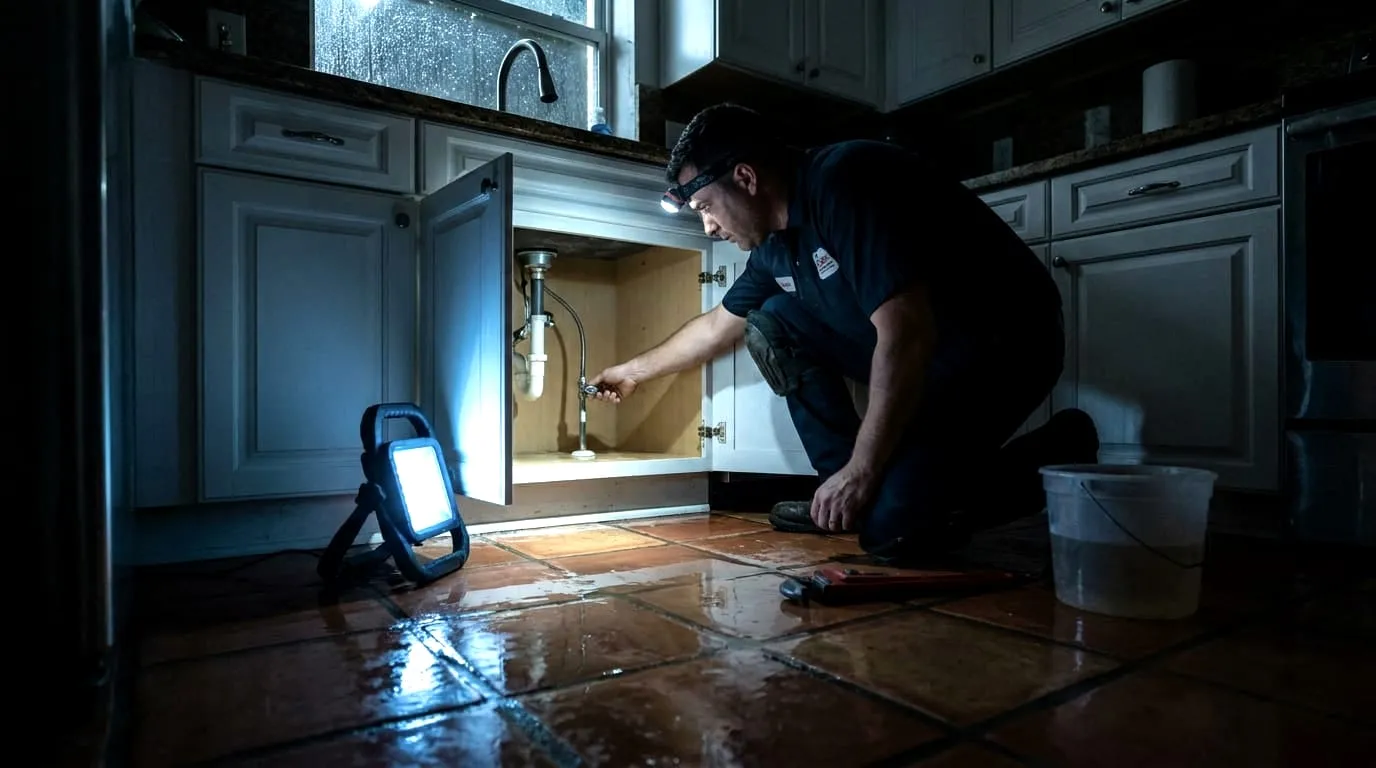
What is under these buildings
Thirty-six square miles holding almost every building era in the region.
You cannot dig deeper than that here without reaching it. That single constraint shapes excavation, slab work and every lateral repair in the city.
The city incorporated in July 1896 with about 300 people and reached almost a quarter of a million by 1950, so the bulk of its older housing predates the change to PVC drains.
And Coral Way was built in 1922. Parts of Miami are older than almost anything else in the coverage area, old enough for galvanized supply as well as cast iron drains.
A limestone formation under the eastern metro area, with its highest natural point in Coconut Grove at twenty-four feet above sea level. It is the closest thing this region has to high ground.
Miami-Dade County contains 35 municipalities and each has its own building official overseeing permits and inspections, which is why the permit answer changes street by street across this county.
How it fails here
One belongs to the towers, one to the pre-war stock and one to the ground.
With water fifteen feet down there is nowhere for an escaping line to drain to, so it moves through fill until the floor lets it up. Opening the slab where the water shows is how one repair becomes several.
Have it located before anything is opened.
Leak detectionHousing from the 1920s and earlier predates copper as the default. Galvanized steel supply closes from the inside rather than bursting, so every tap drops together and there is no day it broke.
Compare pressure at the meter and at a tap.
RepipingIn Brickell and the other high-rise districts the pipe that failed is usually a shared stack or riser, so the unit reporting the water is frequently not the one with the fault.
Note the time and tell the building.
Sewer camera inspectionWhere we work
In a city with this much history, the neighborhood is the era.
Settled in 1825 and the highest natural ground in the city at twenty-four feet on the Miami Rock Ridge. The one place here where elevation is genuinely working in your favor.
Coral Way was built in 1922. This is the pre-war and inter-war stock, where galvanized supply and cast iron drains can sit in the same house and neither is visible.
High-rise, where a leak is usually a shared stack or riser rather than one unit, and access to it runs through building management and a booked shut-off window.
Older inland neighborhoods from the growth that took the city to nearly 250,000 by 1950, squarely inside the cast iron era and its recurring drain failures.
Who owns what
One county utility, thirty-five building officials.
Reviews
Real reviews from the company’s own Google Business Profile, quoted with the reviewer’s public name.
77of the 77 reviews captured from the profile are five stars, and none is below five.
Read straight from the Google Business Profile on August 20, 2026. Counted, not estimated.
Open the Google profileMike came and save me the day he replaced my waterheater after It was flooded all over thanks God there is emergency plumbing SFL BIG RECOMANDATION

Moti gave exceptional service ! He arrived quickly and was done less than an hour ! Will use this company again

Had a really slow drain in my bathroom and it was driving me crazy. The guy who came out was super chill and found a bunch of hair and gunk clogging it up. He cleared it out in like 20 minutes, and now it’s draining faster than before! …
Questions
Because you cannot dig more than fifteen to twenty feet under this city without hitting water, so an escaping line has nowhere to drain down to. It travels sideways through fill and appears wherever the floor lets it, which means the damp patch is evidence rather than a location.
Galvanized steel supply is a real possibility alongside cast iron drains, and a century of partial repairs by different hands behind the walls. The build date narrows it and a camera plus a pressure reading settles it.
Usually not. In high-rise buildings water travels down, so the source is commonly the unit above or a shared riser, and that is the association’s line. Establishing which before anything is opened is what protects you from paying for it.
The City of Miami, but that answer does not travel. Miami-Dade contains 35 municipalities and each has its own building official, so the same job a mile away can go through an entirely different department.
Nearby
Miami touches more of the county than any other city we cover.
Live dispatch · 24 / 7 / 365
A person answers at any hour, walks you through shutting the water off, and a plumber is routed to the address.
No obligation. Work performed under Florida plumbing contractor license CFC1433655.